

Your spine supports your body’s frame and protects the bundle of nerves—the spinal cord—that connect your brain to the rest of your body. As versatile and sturdy as your spine is, accidents and general wear and tear can lead to some short-term injuries and long-term pain. According to the American Chiropractic Association, lower back pain is the leading cause of disability in the world, and experts suggest that up to 80 percent of the population will experience some sort of back problem at some point in life.
However, back pain encompasses a wide range of different disorders and injuries, each comprising different symptoms. Read on to learn about some common back problems and solutions to alleviate the pain.
 Degenerative disc disease doesn’t necessarily have a cure, but the best treatment in your arsenal is to commit to certain lifestyle changes. Posture plays an important role in your overall health and wellness. Consciously practicing good posture can relieve the pressure on any degenerated discs. If your work comprises several straight hours of sitting, invest in ergonomic furniture. Herman Miller office chairs, for instance, provide plenty of support for your back.
Other lifestyle modifications you should keep in mind:
Degenerative disc disease doesn’t necessarily have a cure, but the best treatment in your arsenal is to commit to certain lifestyle changes. Posture plays an important role in your overall health and wellness. Consciously practicing good posture can relieve the pressure on any degenerated discs. If your work comprises several straight hours of sitting, invest in ergonomic furniture. Herman Miller office chairs, for instance, provide plenty of support for your back.
Other lifestyle modifications you should keep in mind:
 begin to narrow, adding pressure to the nerves. The condition appears in two forms: lumbar and cervical. In lumbar spinal stenosis, the nerve roots in the lower back are compressed, causing pain and many of the same symptoms as sciatica. Cervical spinal stenosis is a far more troublesome condition. It affects the bones of your neck, particularly the area around your spinal cord. Compressing the spinal cord can lead to major body weakness, pain, walking limitations, and paralysis.
Spinal stenosis often develops from degenerated spinal elements. Risk factors become significant at the age of 50 with most patients first experiencing symptoms around age 60.
begin to narrow, adding pressure to the nerves. The condition appears in two forms: lumbar and cervical. In lumbar spinal stenosis, the nerve roots in the lower back are compressed, causing pain and many of the same symptoms as sciatica. Cervical spinal stenosis is a far more troublesome condition. It affects the bones of your neck, particularly the area around your spinal cord. Compressing the spinal cord can lead to major body weakness, pain, walking limitations, and paralysis.
Spinal stenosis often develops from degenerated spinal elements. Risk factors become significant at the age of 50 with most patients first experiencing symptoms around age 60.
 Joints generally don’t deal with a lot of friction, moving freely without much thought. As you get older, the cartilage between your joints wears down and becomes rough, causing bones to actually make contact with each other. This can lead to pain, inflammation, and bone spurs.
Spinal arthritis has a variety of causes, though most cases of spinal osteoarthritis are caused by a combination of risk factors, including
Joints generally don’t deal with a lot of friction, moving freely without much thought. As you get older, the cartilage between your joints wears down and becomes rough, causing bones to actually make contact with each other. This can lead to pain, inflammation, and bone spurs.
Spinal arthritis has a variety of causes, though most cases of spinal osteoarthritis are caused by a combination of risk factors, including
1. Degenerative disc disease
Degenerative disc disease is one of the most common causes of back pain. Despite the name, it isn’t actually a disease, and the “degenerative” quality refers to the process of the disc’s damage, not that the disorder gets worse as you age. Degenerative disc disease is simply a term used to describe the pain, weakness, and numbness that comes from a degenerated spinal disc. Degenerative disc disease comes from the natural break down of your spinal discs as you age. As you get older, your discs lose some of their fluid, reducing their flexibility and shock-absorbing abilities. The outer layer of your disc may also suffer from tiny cracks or tears, causing the nucleus of the disc to get pushed out. This leads to a disc that bulges, ruptures, or even breaks into fragments. The wearing down of your discs leads to a great deal of pain that can change in intensity based on your position and level of activity. Degenerative disc disease can also exacerbate other spinal issues, like spinal stenosis, osteoarthritis, and spondylolisthesis.Suggested treatment
Degenerative disc disease doesn’t necessarily have a cure, but the best treatment in your arsenal is to commit to certain lifestyle changes. Posture plays an important role in your overall health and wellness. Consciously practicing good posture can relieve the pressure on any degenerated discs. If your work comprises several straight hours of sitting, invest in ergonomic furniture. Herman Miller office chairs, for instance, provide plenty of support for your back.
Other lifestyle modifications you should keep in mind:
- Avoid nicotine, tobacco, and excessive alcohol, both of which can increase the pain.
- Drink plenty of water.
- Consult your physical therapist for an exercise plan that provides plenty of activity without aggravating your discs.
2. Sciatica
Sciatica is a disorder that describes pain, tingling, numbness, or weakness in the lower back and legs. The condition gets its name from the sciatic nerve, the largest individual nerve in the body that starts in the lumbar spine and runs down the back of each leg. Depending on where the sciatic nerve is pinched, you could exhibit different symptoms and different degrees of pain, from mild and infrequent to intense and debilitating. The most common symptoms of sciatica include:- Lower back pain that can radiate down to the back of your thigh, lower leg, foot, and even toes.
- Sharp pains in your back or legs that cause difficulty standing, walking, or performing basic activities.
- Constant pain in one side of the leg or buttock. It rarely affects both legs.
- Numbness or weakness in your foot or leg.
- Difficulty moving your leg.
Suggested treatment
While most treatments for sciatica focus on rest and medication, one of the best home remedies you can apply is heat or ice therapy. It’s a simple solution for acute pain, and heat and ice packs are readily available. Heat therapy works through several mechanisms. The application of heat dilates blood vessels, increasing blood flow—and thus nutrients and oxygen—to the affected area. Heat also loosens the soft tissues in your back and legs, reducing stiffness. Applying heat also stimulates your skin’s sense receptors, decreasing the pain signals sent to the brain. Cold therapy works by driving down the swelling and inflammation that causes the pain. The numbing effects also slow down nerve impulses to interrupt the pain response.3. Spinal stenosis
Spinal stenosis refers to a condition wherein the spaces between each vertebra begin to narrow, adding pressure to the nerves. The condition appears in two forms: lumbar and cervical. In lumbar spinal stenosis, the nerve roots in the lower back are compressed, causing pain and many of the same symptoms as sciatica. Cervical spinal stenosis is a far more troublesome condition. It affects the bones of your neck, particularly the area around your spinal cord. Compressing the spinal cord can lead to major body weakness, pain, walking limitations, and paralysis.
Spinal stenosis often develops from degenerated spinal elements. Risk factors become significant at the age of 50 with most patients first experiencing symptoms around age 60.
Suggested treatment
Fortunately, you can easily manage spinal stenosis with non-surgical treatments, the most common and effective of which is exercise. Exercising won’t actually cure spinal stenosis, but certain activities, particularly flexion exercises, can relieve pain and discomfort. Some exercises you should try:- Back flexion: Lying on your back, pull your knees up your chest until you feel a comfortable stretching in your back. Hold for 30 seconds before returning your legs to their normal position. Repeat this flex about five times.
- Curl-ups: Lying on the floor, fold your arms across your chest. Tighten your abs to flatten your back to the floor. Raise your head and shoulders from the floor, holding the position for up to four seconds before slowly lowering yourself back down. Aim for two sets of ten repetitions.
- Child’s pose: On your hands and knees, move your body back so that you are sitting on your heels with your chest down and arms outstretched in front of you. Lower your forehead to the ground if you can. You should look like you’re bowing down or genuflecting. Hold this position for 30 seconds before returning to starting position. Aim for five repetitions. This is a common yoga position.
4. Lumbar herniated disc
Your spinal discs are filled with a jelly-like fluid that allows for maximum shock absorption. When a disc degenerates, the inner fluids can leak out. This is known as a herniated disc. The fluid puts direct pressure on the spinal nerve root running above the disc. A herniated disc in the lumbar region causes pain, numbness, and potentially sciatica. Herniated discs are normally caused by disc degeneration but can also occur from repeated stress to the lower back, including poor lifting technique and injuries from sports. Sudden heavy strain or pressure on the lower back can also lead to a disc hernia.Suggested treatment
Chiropractic care can treat herniated lumbar discs through manual manipulation and mobilization. Manual manipulation, commonly known as a chiropractic adjustment, describes a high-velocity arm thrust applied to abnormal vertebrae with the aim of reducing nerve irritation and improving spinal function. Mobilization refers to a gentle moving and stretching of joints and muscles to increase the flexibility and range of motion in the affected areas. Your chiropractor can develop a cumulative treatment plan to relieve any pain and discomfort. However, for more pervasive hernias, you should combine chiropractic care with surgical treatments.5. Spinal arthritis
About one in five adults in the U.S. is diagnosed with arthritis, a general condition that is characterized by pain, inflammation, and stiffness in the joints. Osteoarthritis remains the most common—and most painful—form of arthritis, affecting joints throughout the body, especially those designed to bear weight.Joints generally don’t deal with a lot of friction, moving freely without much thought. As you get older, the cartilage between your joints wears down and becomes rough, causing bones to actually make contact with each other. This can lead to pain, inflammation, and bone spurs.
Spinal arthritis has a variety of causes, though most cases of spinal osteoarthritis are caused by a combination of risk factors, including
- Aging
- Gender: Osteoarthritis is more common in women who have gone through menopause.
- Genetics: If you have a family history of arthritis or joint disorders, you may be more susceptible to osteoarthritis.
- Excess weight
Suggested treatment
Two of the most prominent contributors to arthritic pain are excess weight gain and stress. Weight requires your joints to work harder, causing more strain and friction. By maintaining a healthy weight through a balanced diet and regular exercise, you can effectively relieve the pain in your back. Stress is directly related to muscle tension, which can aggravate arthritic pain. Practice relaxation techniques to manage stress. This can include breathing exercises and meditation. Just because your back hurts doesn’t mean it should be a big pain. Plenty of people lead rich, fulfilling lives with back pain. Living a healthy lifestyle filled with good food, exercise, and plenty of helpful people is the best way to keep the pain at bay, allowing you to stay happy and live your life to its fullest. If your back pain is persistent, please consult your doctor. Images:- Herman Miller Eames Executive Work Chair sold at TheBackStore.com
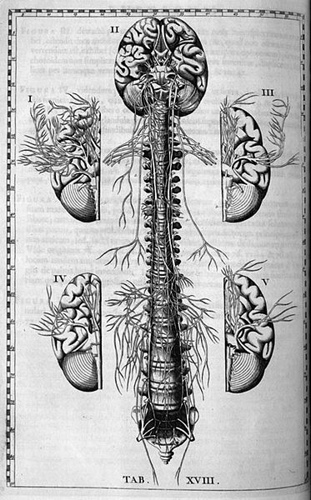
- “Bartolomeo Eustachi: Brain and Spine Anatomy, c. 1722” by brain_blogger is licensed under CC BY 2.0
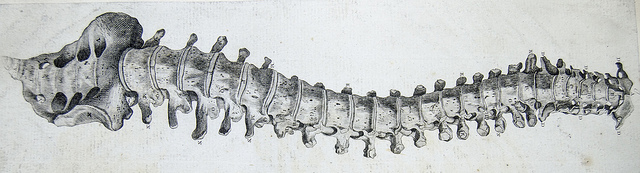
- “Front view of vertebral column from Andrew Bell's Anatomia Britannica (1798?)” by liverpoolhls is licensed under CC BY 2.0
- http://www.spine-health.com/conditions/sciatica/what-you-need-know-about-sciatica
- http://www.spine-health.com/treatment/heat-therapy-cold-therapy
- http://www.spine-health.com/treatment/heat-therapy-cold-therapy/benefits-heat-therapy-lower-back-pain
- http://www.spine-health.com/conditions/spinal-stenosis/what-spinal-stenosis
- http://www.spine-health.com/wellness/exercise/exercise-sciatica-spinal-stenosis
- http://www.spine-health.com/conditions/herniated-disc/lumbar-herniated-disc
- http://www.spine-health.com/treatment/chiropractic/chiropractic-treatments-lower-back-pain
- http://www.webmd.com/back-pain/tc/degenerative-disc-disease-topic-overview
- http://www.spine-health.com/conditions/degenerative-disc-disease/what-degenerative-disc-disease
- http://www.spine-health.com/conditions/arthritis/osteoarthritis-spine