If you’re looking to support your mental, physical, and emotional health all at once, one of your greatest teachers may just be the five-year-old in your life hanging upside down on the monkey bars. Inversion therapy is the practice of being upside down in positions that hold your heart higher than your head, and though inversion comes to us naturally to us as children, many of us discount it as child’s play as we grow up. Contrary to this, keeping up with the practice of hanging upside down has many benefits to the human body and can keep you feeling younger longer, both in body and spirit.
Why Invert?
Inversion therapy offers innumerable benefits, including improvement in circulation, pain relief, support of the digestive and respiratory systems, and benefits that aid our physical fitness and appearance. With inversion therapy having been the focus of many clinical studies and tests, there is now a plethora of research to help you decide if inversion is right for you.
Back Pain
Practicing inversion is one of the only ways to counteract the ongoing effects of constantly living under the pressure of gravity, and therefore mitigating its negative consequences, including common back problems such as scoliosis, osteoarthritis, and cervical spinal stenosis. However, one of the most common reasons people begin to practice inversion therapy is to help avoid back surgery for protuberant disc disease. With a lengthy recovery time and a high cost, many individuals instead opt to practice inversion regularly instead. Inversion therapy can immediately ease back pain as well as decrease the pressure leading to it in the first place, proving much-needed relief, if only temporarily.
Mental Health
Due in part to the dip in cortisol levels while upside down, inversion therapy can be of great benefit to those suffering with depression or seasonal affective disorder. In addition to this, inversion increases circulation, which can support the movement of hormones through the body, reducing mood swings and counteracting any insomnia, as well as reducing stress. This is all, of course, without mentioning the obvious benefit of fun and a change of perspective!
Digestion
Inversions have been central to yoga treatment of indigestion for centuries, and with good reason. As part of digestion, feces travels through the ileocecal valve from the small intestine to the large intestine, a process which is aided by gravity when the body is inverted. When the digestive tract is upside down, gravity pushes feces against the walls of the intestine supporting peristalsis, and aiding in the removal of old fecal matter. This is a natural way of supporting your body to release toxins without the need for strange cleanses or a special diet.
Types of Inversions
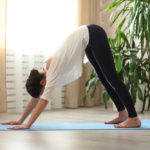
Inversions can be done with or without the aid of special supports. The most basic inversions include simple yoga poses such as legs up the wall, or downward dog, both of which are practiced by beginner yogis and advanced students alike.However, inversion therapy can also be done with the help of supportive furniture, such as an inversion traction unit or an inversion table, both of which hold up the body so that it can rest and reap the maximum benefits of the pose. This is especially helpful when paired with exercise, as physical activity followed by inversion can offer its own multitude of benefits.No matter how you choose to incorporate inversion therapy into your life, practicing even a few minutes of inversion a day consistently can significantly improve the quality of your life. The Back Store specializes in offering furniture specifically tailored to the comfort and wellbeing of our customers. View our inventory today to find the piece that’s right for you.

 If you’re looking to support your mental, physical, and emotional health all at once, one of your greatest teachers may just be the five-year-old in your life hanging upside down on the monkey bars. Inversion therapy is the practice of being upside down in positions that hold your heart higher than your head, and though inversion comes to us naturally to us as children, many of us discount it as child’s play as we grow up.
Contrary to this, keeping up with the practice of hanging upside down has many benefits to the human body and can keep you feeling younger longer, both in body and spirit.
If you’re looking to support your mental, physical, and emotional health all at once, one of your greatest teachers may just be the five-year-old in your life hanging upside down on the monkey bars. Inversion therapy is the practice of being upside down in positions that hold your heart higher than your head, and though inversion comes to us naturally to us as children, many of us discount it as child’s play as we grow up.
Contrary to this, keeping up with the practice of hanging upside down has many benefits to the human body and can keep you feeling younger longer, both in body and spirit.